


Kenya Selects US-Led Consortium to Develop Rare Earth Minerals
TLDR
- Kenya has selected a US-led consortium to develop the Mrima Hill rare earth and niobium deposit, giving American companies access to mineral resources used in electronics, defense equipment and manufacturing
- The Ministry of Mining announced the decision on November 19, 2026, naming Frontier Minerals Consortium as the preferred developer of the deposit in Kwale County, southeastern Kenya
- The project comes as the United States seeks to reduce its dependence on China for minerals used in industrial and technology production
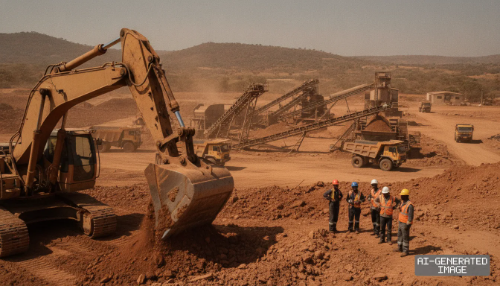
Kenya has selected a US-led consortium to develop the Mrima Hill rare earth and niobium deposit, giving American companies access to mineral resources used in electronics, defense equipment and manufacturing. The Ministry of Mining announced the decision on November 19, 2026, naming Frontier Minerals Consortium as the preferred developer of the deposit in Kwale County, southeastern Kenya. The project comes as the United States seeks to reduce its dependence on China for minerals used in industrial and technology production.
The consortium includes Indiana-based ReElement Technologies and American Resources Corporation, alongside Bunker Hill Mining Corporation and Frontier Minerals. Kenya's mining ministry said the group was selected following a tender process involving bidders from the United States, China, Australia and other markets. Seven groups were shortlisted in July, although the 2 Chinese bidders withdrew before the final selection. The consortium must now consult local communities and obtain prospecting licenses before development can begin.
Mrima Hill contains deposits of rare earth elements and niobium, a metal used in aerospace manufacturing, steel production and industrial equipment. Kenya's mining ministry estimates that the deposit could contain minerals worth tens of billions of dollars, although commercial reserves and development costs have yet to be established. ReElement plans to use its mineral processing technology to support refining operations in Kenya rather than exporting all extracted materials for processing abroad. The consortium said it would invest in workforce training, local businesses and environmental management.
The project faces challenges because Mrima Hill includes a forest considered sacred by local communities. Residents have raised concerns about potential damage to ancestral burial sites, farmland and the environment. The consortium will need to address these issues during consultations and meet environmental and regulatory requirements before mining can proceed. The companies have not disclosed the project's investment cost, production targets or construction timetable.
The selection comes as the US and China compete for access to minerals used in semiconductors, electric vehicles, military equipment and renewable energy technology. China accounts for between 47% and 87% of processing across several critical minerals, according to the International Energy Agency. Kenya also selected a venture involving China's Fangda Special Steel Technology and Sinohydro Corporation for separate chromite and copper projects. President William Ruto has said Kenya wants to process more of its mineral resources domestically to increase export earnings, create jobs and attract industrial investment.
Points clés à retenir
Kenya's selection of a US-led consortium for the Mrima Hill project reflects the growing importance of African mineral deposits in global supply chains. Rare earth elements are used in electric motors, wind turbines, electronics and military equipment, while niobium is used to strengthen steel and manufacture aerospace components. China controls much of the world's mineral processing capacity, creating concerns among countries seeking alternative suppliers. The United States has responded by supporting mining and processing projects outside China, including investments in companies such as ReElement Technologies. For Kenya, the Mrima Hill project offers an opportunity to develop mining and refining operations rather than exporting minerals without processing them. Domestic refining could create jobs, increase industrial activity and allow Kenya to capture more value from its mineral resources. However, the economic impact will depend on the quantity of minerals that can be extracted, processing costs, infrastructure and global market prices. The government's estimate that Mrima Hill contains minerals worth tens of billions of dollars does not represent confirmed revenue or profit. Further exploration is needed to establish recoverable reserves and determine whether mining can be commercially viable. The project also faces opposition from local communities because the deposit lies within a forest used for cultural and religious activities. Community agreements, environmental safeguards and land access will therefore be important before operations can begin. The consortium's selection is only an initial step, with prospecting licenses and other approvals still required. For investors, the indicators will be exploration results, project financing, processing capacity, environmental approvals and agreements with customers. If developed, Mrima Hill could help Kenya expand its mining sector and become a supplier of minerals used in global technology and manufacturing industries.
Vous pensez que quelqu'un d'autre devrait voir ça ?








Investir dans cette opportunité et dans d'autres opportunités à travers l'Afrique
Téléchargez l'application daba finance sur votre mobile via


Passer à l'action.

Télécharger l'application

Entrez en partenariat avec nous
Débloquez des opportunités commerciales passionnantes et un potentiel de croissance.
Rejoindre Daba
Devenez membre de notre communauté dynamique et profitez d'avantages exclusifs.
Contactez-nous
Contactez-nous pour toute demande de renseignements, assistance ou collaboration.