


Kenya to Break Ground on $17B Dangote Oil Refinery Sept 30
TLDR
- Kenya to begin $17 billion oil refinery construction in Lamu, aiming to process 700,000 barrels of crude daily.
- Refinery project involves Dangote Industries, Africa Finance Corporation, and others, with 70% funding from debt.
- Lamu plant to reduce East Africa's reliance on imported fuels, create 60,000 jobs; completion estimated around 2030.
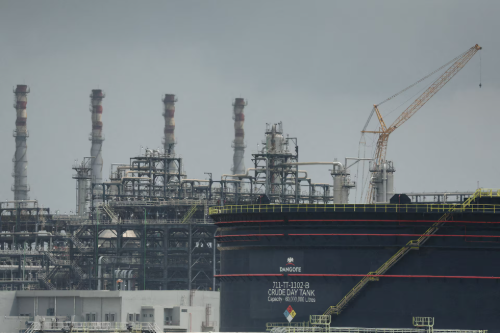
Kenya will break ground on a $17 billion oil refinery in Lamu on September 30, starting construction of a project designed to process 700,000 barrels of crude a day and supply fuel across East and Central Africa. President William Ruto is expected to lead the ceremony, with regional leaders invited to attend.
The refinery is backed by Dangote Industries, Africa Finance Corporation and other investors. About 70% of the project cost is expected to come from debt, with the rest funded through equity. East African governments have been offered participation in the project, with Kenya considering about $500 million and Ethiopia and Rwanda also expressing interest.
Dangote has hired Engineers India Ltd. under a contract worth more than $450 million to provide project management and engineering, procurement and construction management services. The Indian state-owned company performed similar work on Dangote’s refinery in Lagos and is also involved in its expansion to 1.4 million barrels a day.
The Lamu plant is intended to supply Kenya, Uganda, Tanzania, Rwanda, South Sudan and the Democratic Republic of Congo, reducing the region’s reliance on imported gasoline, diesel and jet fuel. Kenya estimates the development could create about 60,000 jobs and support petrochemical and other industrial activity around Lamu.
The main challenge is crude supply. Kenya does not yet produce oil commercially, while Uganda is preparing production and South Sudan remains the region’s main producer. The refinery could therefore need imported crude if regional output and pipeline infrastructure fall short. Construction is expected to take about 3 years, putting completion around 2030 if the project remains on schedule.
Points clés à retenir
The Lamu refinery is a bet that East Africa can replace part of its imported fuel with products refined inside the region, but building the plant is only one part of that equation. A 700,000-barrel-a-day refinery needs a steady crude supply of a scale that East Africa does not yet produce. Government estimates point to future production from South Sudan, Uganda and Kenya, but those barrels will require pipelines, ports and agreements that allow them to reach Lamu. If regional supply falls short, Dangote can import crude by sea, but that would reduce some of the logistics advantage behind locating the refinery in East Africa. Financing is another test. A project costing about $17 billion requires more than $10 billion of debt under the proposed 70% financing structure, making lenders, regional governments and Africa Finance Corporation important to execution. The $450 million Engineers India contract shows that engineering work is moving ahead before groundbreaking. If completed, the plant would give Dangote a second refining base on Africa’s opposite coast, linking its Nigerian operations in the Atlantic with fuel markets around the Indian Ocean. The commercial case will depend on construction costs, crude access and whether regional demand can keep a 700,000-barrel-a-day plant running at high utilisation.
Vous pensez que quelqu'un d'autre devrait voir ça ?









Investir dans cette opportunité et dans d'autres opportunités à travers l'Afrique
Téléchargez l'application daba finance sur votre mobile via


Passer à l'action.

Télécharger l'application

Entrez en partenariat avec nous
Débloquez des opportunités commerciales passionnantes et un potentiel de croissance.
Rejoindre Daba
Devenez membre de notre communauté dynamique et profitez d'avantages exclusifs.
Contactez-nous
Contactez-nous pour toute demande de renseignements, assistance ou collaboration.