Particuliers
Entreprises
Qui Sommes Nous
Intelligence
Nouvelles
Marchés des capitaux africains
IPO DangoteNew
FrenchFrench
share on twittershare on linkedinshare on facebookshare to whatsapp
share on mail
share on instagram

Naira Shows Resilience Amid African Currency Pressures
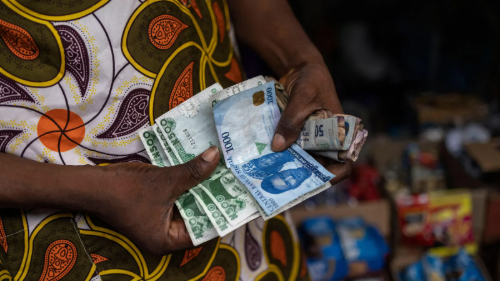
Nigerian naira banknotes with a graph showing currency performance.
AFRICAN BUSINESS AND ECONOMYOctober 8, 2026 at 1:30 AM UTC

TLDR

  • Nigerian naira showed resilience in Q2 2026, depreciating 2.6% compared to larger falls in other African currencies.
  • The World Bank attributes this to Nigeria's oil exporter status and increased foreign exchange inflows.
  • The bank raised Nigeria's economic growth forecast for 2026-2028, citing improved stability and investor confidence.

The Nigerian naira demonstrated resilience among African currencies during the second quarter of 2026, according to the World Bank. Its October 2026 "Africa Economic Update" reported that the naira withstood significant exchange rate pressure. This pressure was largely driven by rising geopolitical tensions and higher global energy prices.

The World Bank's review encompassed exchange rate movements in 22 African countries, excluding those in the CFA franc zone. It compared their currency performance against levels recorded before the escalation of the Middle East conflict. Nigeria's status as a major crude oil exporter played a crucial role in mitigating pressure on the naira. Increased oil prices boosted export earnings and foreign exchange inflows for oil-producing economies like Nigeria, helping to stabilize its currency.

Between March and June, the naira experienced a maximum depreciation of 2.6 percent, a smaller decline compared to several regional peers. Ghana's cedi recorded the sharpest fall, losing as much as 10 percent during the same period. Currencies in South Africa, Lesotho, Namibia, and Eswatini depreciated by up to 7.2 percent, while the Democratic Republic of Congo and Uganda saw declines of 6 percent and 5 percent respectively. By August, the naira had recovered, improving by 1.9 percent from its earlier lows, whereas Ghana's cedi remained 2.5 percent below its end-February level and Uganda's currency was still down 3.1 percent.

The relative stability of the naira coincides with an improved economic outlook for Nigeria, as projected by the World Bank. The institution raised its 2026 growth forecast for Nigeria to 4.3 percent, up from an estimated 4 percent expansion in 2025. It further anticipates the economy will grow by 4.4 percent in both 2027 and 2028. This positive revision is attributed to greater macroeconomic stability, enhanced investor confidence, and a gradual recovery in private investment.

Despite positive indicators, the World Bank cautioned that Nigeria's economic outlook remains susceptible to several risks. These include tighter global financial conditions, a prolonged Middle East conflict, domestic insecurity, and climate-related shocks. Potential disruptions to crude oil production and increased government spending ahead of the 2027 elections also pose risks. The bank emphasized the necessity for Nigeria to sustain economic reforms and build stronger policy buffers to safeguard progress.

Points clés à retenir

The World Bank's October 2026 "Africa Economic Update" highlights Nigeria's naira as one of the more resilient African currencies in the second quarter of 2026, despite widespread exchange rate pressures. While the naira depreciated by a maximum of 2.6 percent between March and June, this was significantly less than declines seen in currencies like Ghana's cedi (10 percent), South Africa's rand (up to 7.2 percent), and Uganda's shilling (5 percent). The report attributes the naira's relative strength to Nigeria's position as a major crude oil exporter, benefiting from increased export earnings and foreign exchange inflows as oil prices rose. This contrasts sharply with countries heavily reliant on imported fuel, which faced greater pressure from higher energy costs. The broader currency sell-off across African markets was also fueled by stronger demand for US dollars, capital outflows from emerging markets, and concerns over rising dollar-denominated debt servicing costs. By August, the naira had recovered 1.9 percent from its lows, outperforming several regional peers that remained weaker. This currency performance underpins the World Bank's raised economic growth forecast for Nigeria, projecting 4.3 percent in 2026 and 4.4 percent in 2027 and 2028, driven by improved macroeconomic stability and investor confidence. However, the outlook remains vulnerable to global financial conditions, geopolitical conflicts, domestic insecurity, and pre-election spending, underscoring the need for sustained economic reforms and robust policy buffers.
Currencies

Vous pensez que quelqu'un d'autre devrait voir ça ?

share on twittershare on linkedinshare on facebookshare to whatsapp
share on mail
share on instagram
Restez informé grâce à nos newsletters lues par plus de 25 000 professionnels dans le monde
Newsletter companiesNewsletter companiesNewsletter companiesNewsletter companiesNewsletter companiesNewsletter companies

Nouvelle Frontière

Restez informé des principales actualités et événements sur les marchés africains. Livré chaque semaine.

Pulse54

Événements

Inscrivez-vous pour rester informé de nos webinaires réguliers, des lancements de produits et des expositions.

+25k investisseurs ont déjà souscrit

Investir dans cette opportunité et dans d'autres opportunités à travers l'Afrique

Téléchargez l'application daba finance sur votre mobile via


appstore iconappstore icon
Phone Image

Passer à l'action.

Télécharger l'application

Entrez en partenariat avec nous

Débloquez des opportunités commerciales passionnantes et un potentiel de croissance.

Rejoindre Daba

Devenez membre de notre communauté dynamique et profitez d'avantages exclusifs.

Contactez-nous

Contactez-nous pour toute demande de renseignements, assistance ou collaboration.
Pour Investisseur
Tracker IPO Raffinerie DangoteNewStratégiesGestion de portefeuilleMarchés des capitaux africainsNouvelles
Daba Pro Intelligence
L'Académie du Patrimoine Daba
Marchés
BRVM — Bourse Régionale des Valeurs MobilièresNGX — Bourse du Nigéria
Pour les chercheurs de capitaux
Pour les startupsPour les gestionnaires de fondsPour les entreprises privéesPour les prêteurs
Pour les partenaires
Les banques commercialesCourtiers ConcessionnairesGestionnaires d'actifsBanques d'investissementConseillers en placement et consultantsPrêteurs et microfinance
Qui Sommes Nous
À propos de nousMises à jour du marchéÉvénementsBlog et PodcastBulletinEtudes de CasProgramme d'affiliationGlossaire d'investissementContacts officielsConfiance, Conformité et SécuritéQuestions Fréquemment Posées

termes et conditionsPolitique de Confidentialite
FrenchFrench

Propriété de Daba Markets Inc. En utilisant ce site, vous acceptez nos conditions générales et notre politique de confidentialité. © 2026 Tous droits réservés