


WAEMU Central Bank Mandates Free Mobile Money Transfers for Small Amounts
TLDR
- The BCEAO has mandated new rules for mobile money transfers in WAEMU, effective November 2, 2026.
- National transfers up to 8,000 FCFA daily will be free, with a 0.8% cap on larger transactions.
- The move aims to boost interoperability and financial inclusion while reshaping operator revenue models.
The Central Bank of West African States (BCEAO) issued new regulations on October 2, 2026, set to redefine the mobile money landscape across the eight countries of the West African Economic and Monetary Union (WAEMU). Effective November 2, 2026, all interoperable electronic money transactions within the Union must be routed through the central bank's instant payment platform, PI-SPI. This directive makes small person-to-person transfers free, while capping fees on larger transactions.
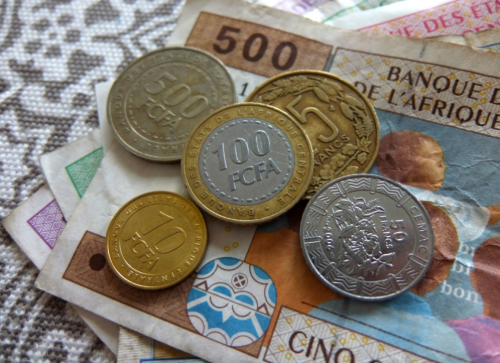
Under the new rules, national transfers are free if the daily cumulative amount per user per institution is 8,000 FCFA (about $13.7) or less, with no limit on the number of operations. The BCEAO estimates this threshold covers approximately 75% of electronic money transfers in the Union. For amounts exceeding 8,000 FCFA, institutions can apply fees ranging from 0% to 0.8% of the amount, excluding taxes. Receiving money remains free, irrespective of the amount or transaction count, and cross-border transfers within WAEMU will adopt these conditions by June 1, 2027.
The PI-SPI platform, launched on September 30, 2025, has connected 175 participants and provides over 38 million people with access to instant payments. According to the BCEAO's 2024 report on digital financial services, the Union recorded 248.7 million electronic money accounts, with 76.8 million active. Total transactions reached 160,415 billion FCFA, equivalent to about 119% of the regional GDP, with transfers accounting for 31.8% of this value and deposits and withdrawals making up 56.8%.
This regulatory shift changes the focus from the number of transactions to the amount transferred, aiming to benefit users making smaller, essential payments. For example, a merchant making ten daily transfers of 500 FCFA will pay nothing, while an individual sending 50,000 FCFA ($85.6) could incur up to 400 FCFA ($0.68) in fees. The BCEAO intends to ensure free services for those most in need, allowing operators to generate revenue from higher-value transactions. A user can send up to 240,000 FCFA ($411) per month for free from a single institution, which is 3.2 times the Ivorian minimum wage of 75,000 FCFA ($128).
The new rules specifically target interoperable transfers and do not cover services such as cash withdrawals, merchant payments, corporate disbursements, bill payments, or credit, leaving operators free to set their own tariffs for these. A critical aspect not addressed is intra-network transfers; if these remain more expensive than inter-network transfers for small amounts, customers may opt for the free inter-network option. The previous PI-SPI rules, which limited free P2P operations to 30 per month, saw slow adoption, with only 221,000 users by December 2025, suggesting the new value-based approach seeks to simplify and boost platform usage.
Points clés à retenir
Vous pensez que quelqu'un d'autre devrait voir ça ?









Investir dans cette opportunité et dans d'autres opportunités à travers l'Afrique
Téléchargez l'application daba finance sur votre mobile via

Passer à l'action.

Télécharger l'application

Entrez en partenariat avec nous
Débloquez des opportunités commerciales passionnantes et un potentiel de croissance.
Rejoindre Daba
Devenez membre de notre communauté dynamique et profitez d'avantages exclusifs.
Contactez-nous
Contactez-nous pour toute demande de renseignements, assistance ou collaboration.