


AfDB Commits $5.7M to Finance Solar Mini-Grids in Africa
TLDR
- African Development Bank provides $5.65 million for solar mini-grid financing in Central African Republic, Chad, Nigeria, and Democratic Republic of Congo.
- Financing mechanism allows developers to monetize renewable energy certificates, accelerating deployment of off-grid solutions in underserved areas.
- Initiative reflects innovative financing models to address energy access challenges in Africa, linking global demand for renewable energy credits with local infrastructure needs.
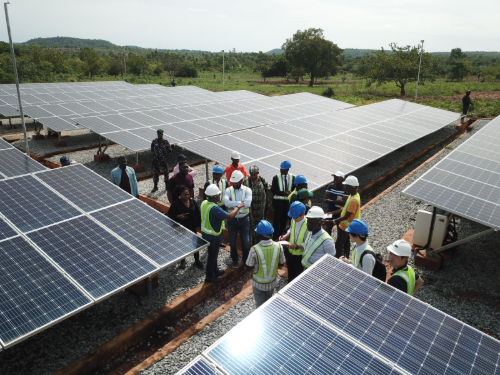
African Development Bank will provide $5.65 million to support a financing mechanism for solar mini-grids in Central African Republic, Chad, Nigeria and the Democratic Republic of Congo.
The funding, approved in Abidjan, will be deployed as a repayable grant through the Sustainable Energy Fund for Africa. It is matched by the Nordic Development Fund, bringing the total programme size to $11.3 million.
The mechanism is designed to channel foreign currency into energy projects in markets where access to traditional financing remains limited. Operational management has been assigned to Camco Clean Energy and Energy Peace Partners.
The model allows developers to monetise renewable energy certificates generated by small-scale power grids. These certificates are sold in advance, providing upfront capital to finance construction or expansion without relying on commercial debt.
The initiative targets countries with low electrification rates and limited access to hard currency financing, with the aim of accelerating deployment of off-grid solutions in underserved areas.
Key Takeaways
The AfDB-backed mechanism reflects a shift toward innovative financing models to address energy access challenges in Africa. Traditional project finance structures often struggle in fragile markets due to currency risk, limited local capital and perceived political instability. By monetising renewable energy certificates, the model creates a new revenue stream that can be converted into upfront capital, reducing reliance on debt financing. This approach links global demand for carbon and renewable energy credits with local infrastructure needs, allowing international companies to support decarbonisation while funding energy access projects. Mini-grids are increasingly seen as a practical solution for rural electrification, particularly in regions where extending national grids is costly or impractical. The programme’s focus on hard currency inflows addresses one of the key constraints facing developers, improving project viability and investor confidence. If successful, the model could be replicated across other markets, helping to scale renewable energy infrastructure and expand electricity access across the continent.
Think someone else should see this?









To invest in this opportunity and other opportunities across Africa
Download the daba finance app on your mobile through

Take action.

Download app

Partner with us
Unlock exciting business opportunities and growth potential.
Join Daba
Become a part of our vibrant community and enjoy exclusive benefits.
Contact us
Reach out to us for inquiries, support, or collaboration.