


Alucam Cameroon Returns to Profit in 2025 After Record 23.8B XOF Loss
TLDR
- Alucam, Cameroon's primary aluminum producer, returned to profit in 2025 with a net income of 279.3 million XOF after incurring a significant loss in 2024.
- The profit turnaround was driven by one-off items totaling 22 billion XOF, including a major compensation payment related to an incident with electricity distributor Eneo.
- Despite showing improvement, Alucam still faces structural weaknesses such as negative equity, financial debt, and underinvestment, attracting interest from global investors aiming to support its relaunch.
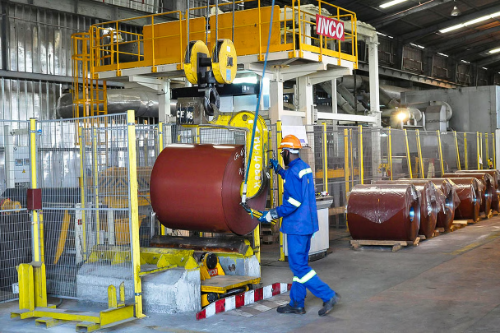
Cameroon Aluminum Company (Alucam), the country's sole primary aluminum producer founded in 1957, returned to profit in 2025 with a net income of 279.3 million XOF, reversing a record loss of 23.8 billion XOF in 2024. EBITDA swung from a deficit of 9.4 billion XOF to a surplus of 14.3 billion XOF, and the operating result improved to a gain of 6 billion XOF from a loss of 18.1 billion XOF a year earlier.
The turnaround was driven less by commercial recovery than by 3 one-off items totalling 22 billion XOF in additional revenue. The largest was a 16 billion XOF compensation payment related to an incident involving electricity distributor Eneo — now renamed Socadel following its nationalisation — whose grid disruption caused production losses at Alucam's electrolysis cells. A 2 billion XOF clearance of previously over-provisioned invoices and a 4 billion XOF reversal of a provision related to the CEMAC Common External Tariff accounted for the rest. Underlying revenue fell 15.3% to 80 billion XOF from 94.4 billion XOF, underscoring that the profit does not reflect a recovery in core commercial activity.
Cost reductions contributed to the improvement. Raw material purchases fell to 48.7 billion XOF from 52.2 billion XOF, other purchases dropped by over 5 billion XOF, and personnel costs were cut by nearly 625 million XOF. Despite those gains, financial expenses rose to 4.2 billion XOF from 3.8 billion XOF, keeping the financial result negative at 4 billion XOF.
Structural weaknesses remain. Equity is negative at 51.9 billion XOF, the retained earnings deficit stands at 108.2 billion XOF, financial debt has grown to 99.2 billion XOF, and net cash is negative at 17.5 billion XOF. The balance sheet reflects years of accumulated losses and sustained underinvestment.
The results land against a backdrop of growing investor interest. Swiss group Bathco confirmed it submitted a proposal to the Cameroonian government to support Alucam's relaunch without acquiring a majority state stake. Singapore-based Eagle Eye, affiliated with the Arise IIP group, has reportedly offered to acquire 70% of Alucam's assets in a deal valued at $475 million (271.3 billion XOF).
Key Takeaways
Alucam's situation illustrates a recurring challenge in African industrial policy: a strategic asset with genuine potential, trapped by debt, infrastructure dependency, and state ownership constraints that deter the private capital needed to modernise it. The company's core problem is energy. Aluminum smelting is one of the most electricity-intensive industrial processes in existence, and Alucam's competitiveness depends entirely on reliable, low-cost power from the Songloulou and Edéa hydroelectric dams on the Sanaga River. The nationalisation of Eneo — and the compensation payment Alucam received for a grid incident — highlights how fragile that dependency is. Cameroon's broader power sector remains underinvested, with chronic shortfalls that have constrained Alucam's production capacity for years. The company operated at around 60% of its 290,000 tonne annual capacity in recent periods, a level that makes unit costs uncompetitive against global peers. The interest from Bathco and Eagle Eye reflects global aluminum market dynamics: primary aluminum demand is rising as the energy transition drives demand for lightweight materials in electric vehicles and renewable energy infrastructure, and African smelting capacity — with access to hydropower — is theoretically well-positioned to supply that demand at low carbon intensity. Whether the Cameroonian government can structure a deal that brings in capital without ceding majority control, as Bathco's framing suggests it prefers, will determine whether Alucam's return to profit in 2025 marks a genuine inflection or merely a one-off accounting recovery.
Think someone else should see this?









To invest in this opportunity and other opportunities across Africa
Download the daba finance app on your mobile through

Take action.

Download app

Partner with us
Unlock exciting business opportunities and growth potential.
Join Daba
Become a part of our vibrant community and enjoy exclusive benefits.
Contact us
Reach out to us for inquiries, support, or collaboration.