


BICICI Posts 30% Profit Jump as Deposits Surge in First Quarter
TLDR
- BICICI, the Abidjan-based BNP Paribas subsidiary, saw a 30% profit increase in Q1 2026, driven by income growth in lending margins and fees.
- Net banking income grew by 17% to 21.2 billion FCFA ($37.9 million), showcasing strong momentum in interest margins and commissions.
- Despite a 4.5% decrease in the loan book to 523 billion FCFA ($935 million), BICICI intends to maintain commercial momentum with disciplined risk and cost management to uphold its profitability in the competitive market.
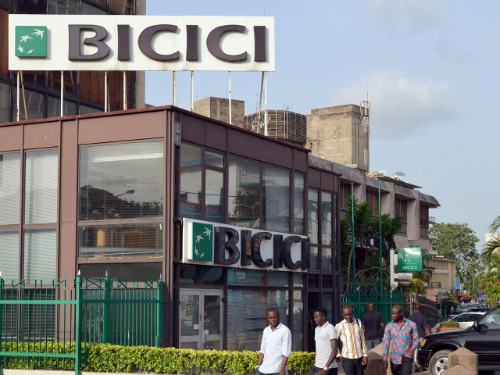
BICICI, the Abidjan-based commercial bank and local unit of BNP Paribas, delivered one of the strongest profit performances among BRVM-listed banks in the first quarter of 2026, with net profit rising nearly 30% to 10.4 billion FCFA ($18.6 million) — a result driven by income growth across both lending margins and fees.
Net banking income grew 17% to 21.2 billion FCFA ($37.9 million), reflecting what the bank described as good momentum in both interest margins and net commissions. The pre-tax result rose 21% to 11.2 billion FCFA ($20 million), suggesting the bank managed costs and risk charges well enough to preserve most of the income gain through to the bottom line.
The balance sheet showed a divergence that is becoming a pattern across the sector: deposits grew 14.5% to 996 billion FCFA ($1.78 billion) while the loan book shrank 4.5% to 523 billion FCFA ($935 million), as early loan repayments by clients reduced outstanding credit. The bank attributed the loan contraction to voluntary prepayments rather than a credit tightening decision on its own part.
BICICI (BRVM: BICC) said it intends to maintain its commercial momentum through the rest of the year while keeping risk and cost discipline in place — a statement of continuity rather than a change in direction.
The result positions BICICI as one of the more profitable banks in Côte d'Ivoire relative to its size, with a pre-tax return that implies a healthy operating margin even in a competitive market.
Key Takeaways
BICICI is Côte d'Ivoire's BNP Paribas subsidiary, a fact that gives it access to a global network for trade finance, structured products, and correspondent banking that most local competitors cannot match. That positioning matters in Côte d'Ivoire, which is the largest economy in the WAEMU zone and a significant hub for commodity finance — cocoa, coffee, rubber, and palm oil all require pre-export financing and hedging solutions that a bank with BNP Paribas behind it is well placed to provide. The 17% rise in net banking income on a flat-to-shrinking loan book is notable: it suggests BICICI is earning more per unit of credit and per transaction — either through better-priced lending, higher fee extraction, or a more profitable mix of business. The client prepayments that reduced the loan book are a reminder that large corporate borrowers in West Africa often manage liquidity actively, repaying when they have cash rather than holding balances. For investors, a 30% profit jump is a strong result in any environment; the question is whether it is a trend or a single-quarter achievement. The full-year 2025 trajectory and the bank's capacity to rebuild its loan book without sacrificing quality through Q2 and Q3 will determine whether 2026 becomes a year of compound earnings growth or a reversal.
Companies in this story
Think someone else should see this?









To invest in this opportunity and other opportunities across Africa
Download the daba finance app on your mobile through

Take action.

Download app

Partner with us
Unlock exciting business opportunities and growth potential.
Join Daba
Become a part of our vibrant community and enjoy exclusive benefits.
Contact us
Reach out to us for inquiries, support, or collaboration.