


Ivorian Lender BICI Profit Jumps 39% on Higher Revenue
TLDR
- BICICI, now owned by an Ivorian state consortium, sees a 39% increase in net profit, reaching XOF 36.5 billion in 2025.
- Strategic shift towards government bonds drives revenue growth, with net banking income rising 17% to XOF 79.6 billion.
- While deposits surge by 16%, customer loans decline by 7%, signaling a focus on safety in government securities over expanding the loan book for BICICI's growth strategy.
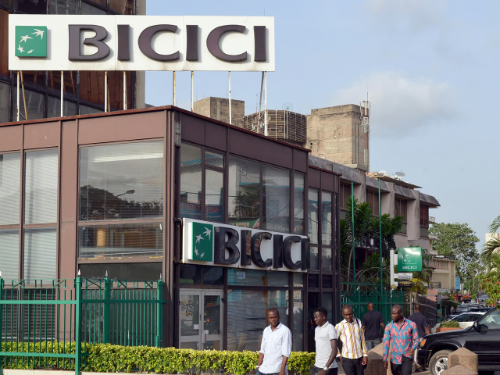
BICICI, the Abidjan-based, BRVM-listed lender now owned by an Ivorian state consortium, posted a 39% jump in net profit for the year ended December 31, 2025 — the clearest sign yet that the bank's transition away from French parent BNP Paribas, completed in 2022, has not derailed its growth trajectory. Net profit reached XOF 36.5 billion ($65.6 million), up from XOF 26.2 billion ($47.1 million) in 2024.
The result was driven by revenue, not cost-cutting. Net banking income — the top-line measure for banks — grew 17% to XOF 79.6 billion ($143 million), carried by a near-30% rise in net commission income and a 26% jump in returns from the securities portfolio. That portfolio shift — away from loans and toward government bonds — is the defining strategic move of the year, and it paid off.
Lending, however, went the other way. Customer loans fell 7% while deposits rose 16%, pushing the deposit book to XOF 952.9 billion ($1.71 billion). The gap between growing deposits and shrinking loans is a signal that the bank (BRVM: BICC) is choosing yield and safety in government paper over the credit risk that comes with expanding the loan book. That choice flattered 2025 earnings but raises a question about how long the bank can sustain 39% profit growth if it is not putting money to work in the economy.
Cost control held. General operating expenses barely moved, and the cost-of-risk charge remained modest, contributing to an operating result that rose 41% to XOF 40.6 billion ($72.9 million) before tax.
Total assets grew to XOF 1.13 trillion ($2.03 billion). The bank's annual general meeting is set for May 4, 2026 in Abidjan, where shareholders will vote on the 2025 accounts. Earnings per share rose to XOF 2,191 from XOF 1,574.
Key Takeaways
BICICI's story since 2022 is one of the more instructive in West African banking: a state-led consortium bought a French bank's subsidiary for XOF 80 billion, and within 3 years the bank is posting record profits. Fitch Ratings, which rates the bank, has flagged that BICICI's legacy relationships with multinational companies — a direct inheritance from BNP Paribas — remain a source of credit quality, since large corporate exposures account for roughly half the loan book and tend to be the strongest credits locally. But the same report noted that concentration risk is high, and that the bank holds ambitions to lift its market share from around 5% to 8-9% within 4 years — a target that will require growing the loan book, not shrinking it. The pivot to securities in 2025 boosted short-term returns, but investors watching the BRVM-listed stock should track whether management restarts loan growth in 2026, particularly as Cote d'Ivoire's post-election investment cycle — anchored by the 2026-2030 National Development Plan — creates corporate credit demand that BICICI is well-positioned to capture if it chooses to.
Companies in this story
Think someone else should see this?









To invest in this opportunity and other opportunities across Africa
Download the daba finance app on your mobile through

Take action.

Download app

Partner with us
Unlock exciting business opportunities and growth potential.
Join Daba
Become a part of our vibrant community and enjoy exclusive benefits.
Contact us
Reach out to us for inquiries, support, or collaboration.