


Bank of Africa Mali Profit Rises 21% on Reduced Bad Loans
TLDR
- BOA Mali's 2025 net profit increased by 21%, driven by revenue growth and reduced bad loan absorption costs.
- Despite challenges such as increased depreciation charges and operating costs, the bank showed resilience and a stronger bottom line.
- The bank's balance sheet expanded, with total assets growing to XOF 593.5 billion, while maintaining steady capital and reserves for future stability.
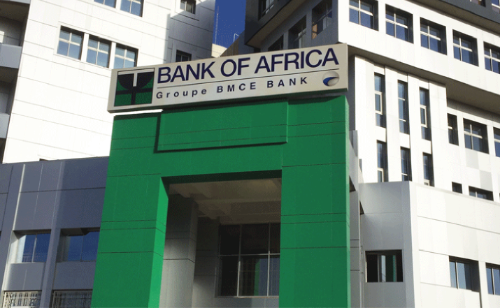
Bank of Africa Mali (BRVM: BOAM) Sposted a 21% rise in net profit for the year ended December 31, 2025, a result that cuts against the grain for a bank operating in one of the Sahel's most difficult economies — and stands in direct contrast to its sister entity in Burkina Faso, which saw profit fall over the same period.
The turnaround was driven by 2 things working in tandem: revenue grew while the cost of absorbing bad loans fell sharply. Net banking income — the top-line measure for banks — rose to XOF 38 billion ($66.7 million) from XOF 36.2 billion ($63.6 million). At the same time, credit provisions dropped by more than a third compared to 2024, easing the single biggest drag on the prior year's earnings. Net profit came to XOF 11.1 billion ($19.5 million), up from XOF 9.1 billion ($16 million).
Not everything moved in the right direction. Depreciation charges more than tripled, pointing to a heavy investment cycle that will take time to earn back. Operating costs also edged up, and the gross operating result dipped slightly as a result. Still, the bank absorbed those pressures and delivered a stronger bottom line.
The balance sheet expanded, with total assets growing to XOF 593.5 billion ($1.04 billion) from XOF 541.5 billion ($951 million). Customer deposits rose, but lending to clients contracted — a signal of cautious credit deployment even as conditions appeared to ease.
Capital remained steady. Subscribed capital was unchanged, and reserves grew, leaving the bank's financial foundation intact heading into 2026.
Key Takeaways
The profit recovery at BOA Mali is notable partly because of when it happened. Mali's economy has been grinding through an accumulation of shocks — the shutdown of the Loulo-Gounkoto gold mine after a dispute between the junta and Canada's Barrick Gold, chronic electricity shortages, the withdrawal from ECOWAS in January 2025, and a security crisis in which armed groups, including JNIM and the Islamic State Sahel Province, continue to hold large parts of the country's north and centre. The IMF, in its 2025 Article IV consultation, flagged growing bank exposure to government securities and a halt in credit expansion as vulnerabilities. Malian banks, including BOA, have increasingly absorbed domestic sovereign debt as external financing has dried up — a source of yield in the short term but a concentration risk if the government struggles to service its obligations. Borrowing costs remain high, with 12-month treasury bill yields near 9.8%. That BOA Mali cut its bad loan provisions even in this environment suggests either that asset quality genuinely improved, or that the prior year's provisioning was conservative enough to allow a release — either way, a result the bank's peers across the Sahel would likely envy.
Companies in this story
Think someone else should see this?









To invest in this opportunity and other opportunities across Africa
Download the daba finance app on your mobile through

Take action.

Download app

Partner with us
Unlock exciting business opportunities and growth potential.
Join Daba
Become a part of our vibrant community and enjoy exclusive benefits.
Contact us
Reach out to us for inquiries, support, or collaboration.