


Bank Of Africa Senegal Net Profit Rises 10% To 21.9B XOF in 2025
TLDR
- BOA Senegal's 2025 financial results reveal a 10% increase in net profit, reaching 21.9 billion XOF ($38.5 million).
- Net banking income grew by 4.6%, reaching 51.93 billion XOF ($91.2 million), supported by interest income and gains on investment portfolios.
- Senegal's robust economic growth, fueled by the 2024 oil production, is reflected in BOA Senegal's performance amidst a challenging debt crisis and shifting macroeconomic landscape.
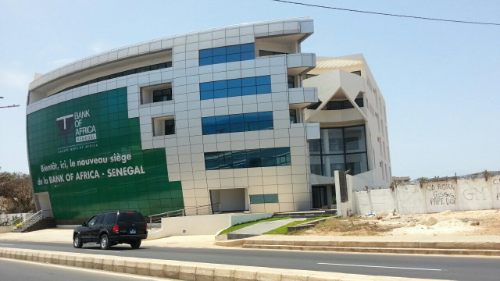
Bank of Africa Senegal, a unit of Morocco's BMCE Group, posted a net profit of 21.9 billion XOF ($38.5 million) for the year ended December 31, 2025, up 10% from 19.98 billion XOF ($35.1 million) in 2024, according to audited financial statements certified by Forvis Mazars and Eureka Audit & Conseils.
Per results published by the company (BRVM: BOAS), net banking income rose 4.6% to 51.93 billion XOF ($91.2 million) from 49.67 billion XOF ($87.2 million), supported by growth in interest income, commissions, and gains on investment portfolios.
General operating charges increased to 20.17 billion XOF ($35.4 million) from 19.69 billion XOF ($34.6 million), while the cost of risk declined to 4.35 billion XOF ($7.6 million) from 4.43 billion XOF ($7.8 million), pointing to an improvement in loan quality.
The bank, listed on the Bourse Régionale des Valeurs Mobilières (BRVM) and the only Senegalese bank on the exchange, approved a dividend of 450 XOF ($0.79) per share of 1,000 XOF par value for 2025, maintaining its distribution from the prior year.
Key Takeaways
BOA Senegal's 2025 results land at a time when Senegal's economy is in the middle of a significant structural shift. The country began oil production from the Sangomar field in June 2024, and full-year 2025 crude output is projected at 30.5 million barrels, a development that pushed GDP growth to an estimated 10.1% in 2025, one of the highest rates in the WAEMU zone. That growth is feeding through to banking activity: Senegal recorded the highest credit volume in the WAEMU in Q1 2025, with 7.13 trillion XOF in short-term credit and 8.61 trillion XOF in medium and long-term loans registered with the BCEAO. However, a debt crisis that surfaced in mid-2024 — when Dakar disclosed that fiscal deficits and public debt had been materially underreported for years, with public debt now pegged at 119% of GDP for 2024 — has clouded the macro backdrop. Senegal lost access to international capital markets over the course of 2025, pushing the government toward domestic and regional WAEMU financing. For banks like BOA Senegal, that dynamic is a dual-edged position: it creates near-term demand for domestic credit and government paper, but raises sovereign risk exposure at a time when the IMF and bilateral creditors are negotiating a potential debt restructuring framework.
Companies in this story
Think someone else should see this?









To invest in this opportunity and other opportunities across Africa
Download the daba finance app on your mobile through

Take action.

Download app

Partner with us
Unlock exciting business opportunities and growth potential.
Join Daba
Become a part of our vibrant community and enjoy exclusive benefits.
Contact us
Reach out to us for inquiries, support, or collaboration.