


West Africa's Sole Bitumen Maker Posts Best Profit in Years
TLDR
- Societe Multinationale de Bitumes (SMB) achieved a 50% increase in net profit to 13.1 billion FCFA in 2025, driven by high demand for its bitumen due to regional road construction activity.
- With revenue reaching 206.7 billion FCFA, SMB saw a significant 29% rise in value added and a 42% increase in gross operating surplus, signaling notable margin expansion.
- SMB, the only bitumen producer in West Africa, operates as the sole supplier to Ivory Coast and neighboring countries, including Mali, Burkina Faso, and Niger, with its stock gaining 29% on the BRVM in 2026.
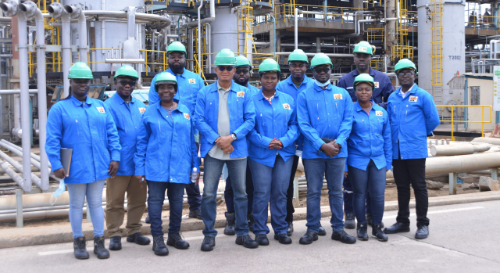
Societe Multinationale de Bitumes, the only bitumen producer in West Africa, posted a net profit of 13.1 billion FCFA ($23.4m) in 2025 — a 50% increase — as road construction activity across the region drove demand for its product.
Revenue reached 206.7 billion FCFA ($369.5m). Value added rose 29% and the gross operating surplus jumped 42%, pointing to meaningful margin expansion rather than just volume. Cash at year-end was 24 billion FCFA ($42.9m), up sharply from 6.1 billion FCFA ($10.9m) a year earlier, after the company collected on outstanding receivables. No long-term debt was added to the balance sheet.
SMB (BRVM: SMBC) refines heavy crude oil at its Abidjan facility to produce road bitumen, kerosene and petroleum by-products. It sells into Ivory Coast and across landlocked neighbours — Mali, Burkina Faso and Niger — whose road networks are among the most underdeveloped on the continent. The company was created in 1976 by presidential decree and operates as the sole supplier to a captive regional market.
The stock has responded: SMB shares have gained 29% on the BRVM so far in 2026, making it one of the exchange's better performers.
Key Takeaways
SMB's monopoly position in West African bitumen gives it structural pricing power that few industrial companies anywhere can match. Every road built in Ivory Coast, every highway project in Mali, every urban road rehabilitation in Burkina Faso requires SMB's product — there is no alternative regional supplier. That dynamic makes the company's profitability a direct function of government infrastructure budgets, and those budgets in West Africa have been rising steadily under national development plans backed by the World Bank, AfDB and bilateral lenders. The first half of 2025 was reported as difficult, with a 23% revenue decline at the half-year stage, suggesting the full-year recovery was concentrated in the second half — possibly linked to the timing of large government contracts. SMB's balance sheet carries no significant long-term debt, which means the cash it generates is available for dividends or reinvestment rather than debt service. At a market capitalisation of around 95.5 billion FCFA ($170.7m) and growing earnings, the stock is drawing investor attention on a regional exchange that is often short of quality industrial names.
Companies in this story
Think someone else should see this?









To invest in this opportunity and other opportunities across Africa
Download the daba finance app on your mobile through

Take action.

Download app

Partner with us
Unlock exciting business opportunities and growth potential.
Join Daba
Become a part of our vibrant community and enjoy exclusive benefits.
Contact us
Reach out to us for inquiries, support, or collaboration.