


Dangote, Ethiopia to Build $660M Djibouti Fuel Pipeline
TLDR
- Dangote Group and Ethiopian Investment Holdings invest $660 million in petroleum-products pipeline linking Ethiopia to Djibouti coast.
- Project includes 120km pipeline, storage capacity of 375,000 cubic meters in Djibouti, and 800,000 cubic meters in Ethiopia.
- Aims to reduce tanker truck dependence, lower transport costs, and boost efficiency along the Ethiopia-Djibouti corridor.
Dangote Group and Ethiopian Investment Holdings will invest $660 million in a petroleum-products pipeline connecting landlocked Ethiopia with Djibouti’s coast, adding new fuel storage and transport infrastructure to one of East Africa’s main trade corridors. The project was announced by Ethiopian Prime Minister Abiy Ahmed alongside Djibouti President Ismail Omar Guelleh and Aliko Dangote.
The project will include a 120-kilometre pipeline running from Damerjog in Djibouti to Dewele in Ethiopia. Storage capacity will total about 375,000 cubic metres at Damerjog and 800,000 cubic metres at Dewele. The system is expected to begin operations within 18 months.
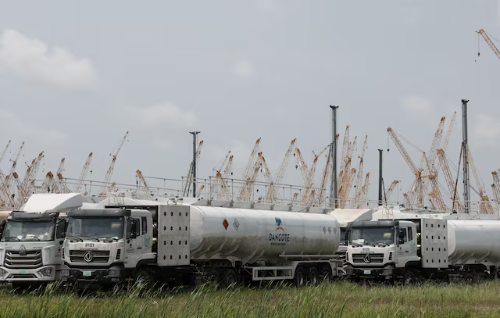
Refined petroleum products arriving by sea will be stored at Damerjog before moving through the pipeline to Dewele for distribution across Ethiopia. The project is designed to reduce dependence on tanker trucks, lower transport costs and shorten delivery times along the Ethiopia-Djibouti corridor.
The investment adds to Dangote’s projects in Ethiopia. The group is also developing a fertilizer project and related infrastructure in the country. In Djibouti, work has started on the Damerjog petroleum terminal, which will serve as the coastal end of the new fuel corridor.
The pipeline also extends Dangote’s expansion beyond West Africa. The group is preparing to start work on a 700,000-barrel-a-day refinery in Lamu, Kenya, while its Lagos refinery supplies fuel to Nigeria and export markets. The Ethiopia-Djibouti project gives Dangote another position in East Africa’s fuel supply chain.
Key Takeaways
The $660 million project is about transport as much as fuel. Ethiopia has no coastline and depends on Djibouti for much of its international trade, which means petroleum products arriving at the coast must move inland before reaching consumers. A dedicated pipeline can move larger volumes without relying on thousands of tanker journeys, reducing road congestion, delivery delays and transport costs. The storage terminals add another layer by allowing Ethiopia and Djibouti to hold more fuel close to the supply route rather than depend on continuous deliveries. For Dangote, the investment also creates infrastructure around a market that could become a customer for fuel produced by its refining network. The group is building a presence across East Africa through projects in Ethiopia and Kenya, while its Nigerian refinery is expanding toward 1.4 million barrels a day. That means logistics will matter as much as refining capacity: producing more fuel has limited value without routes to move it to large markets. The pipeline gives Dangote a direct position in that infrastructure while Ethiopia gains another way to secure supply. The main test will be whether construction meets the 18-month timetable and whether lower logistics costs translate into cheaper and more reliable fuel distribution.
Think someone else should see this?









To invest in this opportunity and other opportunities across Africa
Download the daba finance app on your mobile through


Take action.

Download app

Partner with us
Unlock exciting business opportunities and growth potential.
Join Daba
Become a part of our vibrant community and enjoy exclusive benefits.
Contact us
Reach out to us for inquiries, support, or collaboration.