


Startup Egrobots Launches Egypt-Made Harvesting Robot
TLDR
- Egrobots unveils autonomous agricultural harvesting robot using AI, computer vision, and autonomous navigation for efficient harvest tasks.
- Designed to address labour shortages, operating costs, and waste reduction in agriculture, Egrobots' robot can harvest 160 kg/hour with 4 robotic arms.
- Egrobots represents a shift towards hardware-led AI systems in Africa and the Middle East, showcasing the potential for local robotics development and industrial skills growth.
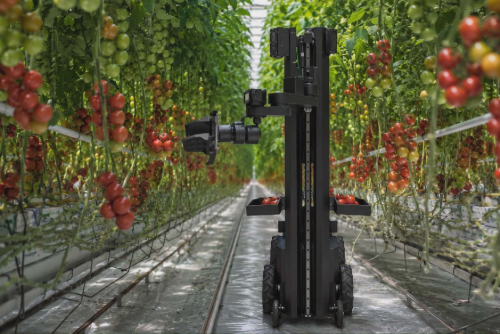
Egrobots has unveiled an autonomous agricultural harvesting robot developed by Egyptian engineers, marking a local push into robotics, artificial intelligence and farm automation.
The robot uses AI, computer vision and autonomous navigation to identify ripe crops, move across farms and complete harvesting tasks with limited human input. It can be fitted with as many as 4 robotic arms and can harvest about 160 kilograms per hour while operating around the clock.
The company said the robot is designed to help farms deal with labour shortages, higher operating costs and the need to reduce waste during harvest periods. Agriculture remains labour-intensive across much of the region, making automation a growing focus for food producers and technology firms.
Egrobots was founded in Egypt in 2023 by Akhlad Alabhar and Amr Saleh. The company focuses on physical AI, autonomous systems and robotics for agriculture, industry and public services. It is part of the Google for Startups program and NVIDIA Inception.
The launch places Egrobots among a small group of African and Middle Eastern startups building hardware-led AI systems rather than only software tools. The company has also developed a traffic robot in partnership with Egypt’s Ministry of Interior and is working on humanoid robotics and industrial automation products aligned with regional digital transformation plans.
Key Takeaways
Egrobots’ harvesting robot shows how AI in Africa and the Middle East is moving from chatbots and software into machines that can work in the real economy. Agriculture is one of the clearest use cases. Farms need labour, speed and precision, especially during harvest periods when delays can lead to crop losses. A robot that can identify ripe crops and work for long hours could help producers cut costs and manage labour gaps. But adoption will depend on price, reliability, maintenance and whether farmers can use the machines without complex training. Robotics also requires local support, spare parts and financing, which can be difficult for early-stage hardware companies. Still, the launch matters because it points to a deeper technology base in Egypt. If companies like Egrobots can build and deploy robotics locally, the region could reduce dependence on imported automation and create new industrial skills. The bigger test will be whether this technology moves from demonstration to commercial use across farms, factories and public services.
Think someone else should see this?









To invest in this opportunity and other opportunities across Africa
Download the daba finance app on your mobile through


Take action.

Download app

Partner with us
Unlock exciting business opportunities and growth potential.
Join Daba
Become a part of our vibrant community and enjoy exclusive benefits.
Contact us
Reach out to us for inquiries, support, or collaboration.