


Foreign Investors Miss Out on Nigeria’s 66% Stocks Rally
TLDR
- Foreign investors reduce Nigerian stock trading share in 2026, flock to short-term government debt with yields near 20%.
- Central Bank of Nigeria utilizes Treasury and open-market bills to attract dollar inflows and support reserves.
- Nigerian stocks surge 66% in dollar terms in 2026, driven by local investors and stable currency, relying heavily on domestic demand for continued growth.
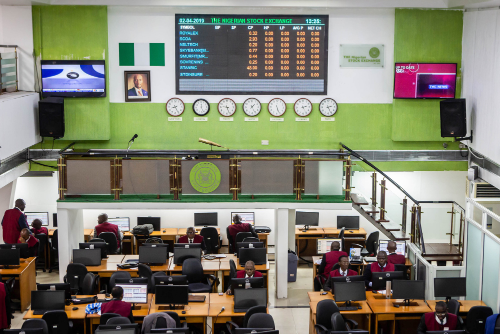
Foreign investors cut their share of Nigerian stock trading in 2026, missing a rally that made the market the world’s top performer. Non-residents accounted for 12% of transactions, down from 27% a year earlier, while local investors increased their share to 88% from 73%.
Overseas funds shifted toward short-term government debt, where yields near 20% offered income with less price risk than stocks. The Central Bank of Nigeria has used Treasury and open-market bills to attract dollar inflows, support reserves and remove cash from the banking system.
A move to T+1 settlement on June 1 also reduced the appeal of stocks for some global investors. The shorter cycle can force institutions operating across time zones to fund trades before settlement. FTSE Russell placed Nigeria’s planned return to frontier-market status under review and said it would give an update by the end of August.
Local investors drove the rally after Nigerian stocks gained 63% in 2025. The naira, which rose in 2025 for the first time in 13 years, has held within a range this year. That reduced the currency losses that had kept investors away from naira assets.
Nigeria’s stocks have gained about 66% in dollar terms in 2026, passing South Korea’s Kospi after a selloff in technology shares. The Kospi lost 22% in July as investors questioned spending on artificial intelligence. Nigeria’s gains show the effect of local capital, currency stability and company earnings, but low foreign participation leaves the rally dependent on domestic demand.
Key Takeaways
Nigeria’s market has become a test of whether a stock rally can last without foreign capital. Local pension funds, asset managers and retail investors can support prices, but overseas participation matters for liquidity, trade size and Nigeria’s place in global indexes. Foreign funds face a choice between stocks and government bills yielding close to 20%. Stable exchange rates make the debt trade more useful because investors can earn the yield without losing the return when converting naira back into dollars. The same stability supports stocks, but equities carry company and market risk and require more time to exit. T+1 settlement adds another issue. Faster settlement lowers counterparty risk, but it can require foreign institutions to move cash before a trade, which raises costs and limits flexibility. FTSE Russell’s review could affect the next stage. A return to frontier status could bring index-linked funds and improve foreign demand. A delay could keep the market tied to local buyers. The rally is not proof that foreign investors made the wrong choice. Bills offered income while stocks carried more risk. The key question is whether earnings, naira stability and domestic flows can keep supporting prices after the gains already recorded.
Think someone else should see this?









To invest in this opportunity and other opportunities across Africa
Download the daba finance app on your mobile through

Take action.

Download app

Partner with us
Unlock exciting business opportunities and growth potential.
Join Daba
Become a part of our vibrant community and enjoy exclusive benefits.
Contact us
Reach out to us for inquiries, support, or collaboration.