


Kenya Orders Tata Chemicals Out of Magadi Soda Ash Operation
TLDR
- Kenyan President William Ruto orders Tata Chemicals to end operations at Lake Magadi due to insufficient local investment.
- Government plans to bring in 2 companies to develop soda ash into glass and other chemicals in Kajiado County.
- Tata Chemicals Magadi faces suspension pending regulatory review, emphasizing the need for local mineral processing and manufacturing.
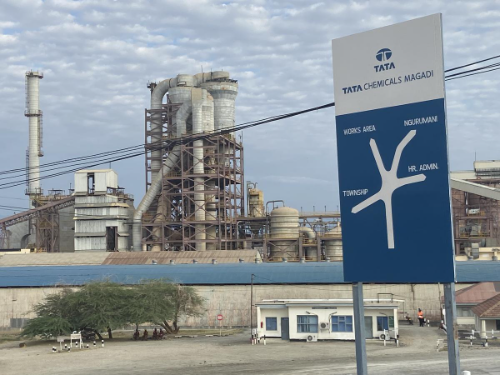
Kenyan President William Ruto has ordered Tata Chemicals to end its operations at Lake Magadi, escalating a dispute over one of the country’s oldest mining businesses. Ruto said the operation had failed to generate enough local investment and that the government plans to bring in 2 companies to develop soda ash into glass and other chemicals in Kajiado County.
The decision follows a July 28 government order suspending mining and exports at Tata Chemicals Magadi while authorities reviewed regulatory issues. Tata said it submitted the requested documents and maintains that it complies with Kenyan requirements. The company said it will continue engaging the government through legal and regulatory channels.
Lake Magadi has produced soda ash commercially since 1911. Tata Chemicals acquired the business in 2005 and now operates capacity of about 350,000 metric tons a year. The product is used in glass, detergents and chemicals. Kenya exported 254,779 tons of soda ash worth about $56.9 million in the year through July 2025, with Magadi supplying customers in Africa, Asia and the Middle East.
Ruto said the next operators will be required to process more of the mineral inside Kenya rather than export it with limited local manufacturing. The government wants a glass plant and a chemicals factory built in Kajiado, part of a push to extract more value from the country’s minerals and create manufacturing jobs.
The exit would affect employees, suppliers and communities linked to the Magadi operation and could disrupt one of Kenya’s mineral exports during the transition. Tata said the welfare of its workers and the Magadi community remains a priority. The government has not disclosed the companies it plans to bring in or the timetable for transferring the operation.
Key Takeaways
The dispute is about more than ownership of a soda ash mine. Kenya is questioning whether exporting a mineral is enough when the same resource can support manufacturing inside the country. Magadi has about 350,000 tons of annual soda ash capacity and exports most of its production, making it a source of foreign currency but also a test of the government’s industrial policy. Ruto wants future operators to use the mineral as an input for glass and chemicals, which could keep more processing, jobs and tax revenue in Kenya. The risk is the transition. Removing an operator with an established plant, customers and supply network before replacement investors are ready could reduce output and exports. Tata has also invested in the site, including a 5 MW solar plant and an electric calciner commissioned in 2025, which complicates the claim that no investment has taken place. The government will therefore need to show that new operators can provide more economic value without creating a long interruption in production. The decision may also be watched by foreign investors because it raises questions about how Kenya balances existing investment rights with demands for local processing. The outcome could influence how future mining agreements are structured.
Think someone else should see this?









To invest in this opportunity and other opportunities across Africa
Download the daba finance app on your mobile through


Take action.

Download app

Partner with us
Unlock exciting business opportunities and growth potential.
Join Daba
Become a part of our vibrant community and enjoy exclusive benefits.
Contact us
Reach out to us for inquiries, support, or collaboration.