


Mali Creates Gold Agency to Tighten Control of Exports
TLDR
- Mali creates Malian Office of Precious Substances (OMASP) to regulate gold and mineral sales, enhancing export traceability.
- OMASP aims to curb undeclared gold exports, estimated at billions of dollars annually, bridging the gap in official output.
- Government's mining reforms include raising local stake in projects, increased tax duties for foreign operators, and building a gold refinery for local processing.
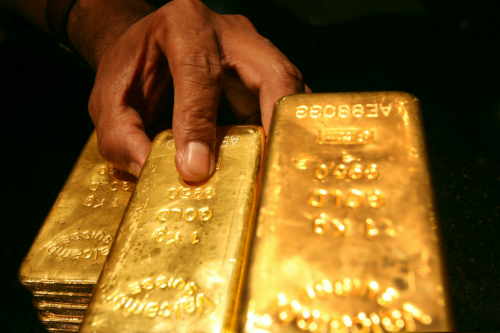
Mali’s transitional parliament approved a law creating the Malian Office of Precious Substances, a new state agency that will regulate and secure the sale of gold and other precious minerals.
The agency, known as OMASP, was created by decree in April 2026 and placed under the Ministry of Industry and Trade. The new law gives it a legal basis to centralize gold flows, oversee transactions and improve export traceability.
Gold is Mali’s top export and a main source of state revenue. Industrial output is estimated at about 60 tons a year, while artisanal mining supports nearly 2 million people across 350 to 400 sites. Gold accounts for about 25% of public revenue and nearly 75% of national exports.
The reform targets the gap between official output and gold that leaves the country through informal channels. SWISSAID has estimated Mali’s undeclared gold exports at 30 to 57 tons a year, worth as much as $3.77 billion. From 2012 to 2022, unrecorded volumes were estimated at about 300 tons, with a value of $13.5 billion.
OMASP is part of a wider mining overhaul started in 2023. Mali’s new mining code raised the combined stake of the state and local investors in industrial projects to 30% and increased tax duties for foreign operators. Sector audits have also helped recover about 761 billion CFA francs in arrears. The government is also building a gold refinery in Sénou, with planned capacity of 200 tons a year, to raise local processing and reduce raw metal exports.
Key Takeaways
Mali’s gold reform is about revenue, control and security. The country depends on gold for exports, budget income and rural jobs, but a large part of the trade still moves through channels the state does not fully track. OMASP gives the government a tool to bring more artisanal gold into the formal economy, reduce smuggling and raise tax collection. For investors, the move shows that Mali wants a larger share of mining value at a time when gold prices have supported export earnings. It also shows that policy risk remains high for operators, because the state is changing rules, auditing contracts and pushing for more local control. The hard part will be formalizing artisanal mining without hurting the families that depend on it. If rules are too strict, miners may stay outside the system. If controls are weak, gold leakage will continue. The refinery plan adds another layer, because local processing could keep more value in Mali. But success will depend on governance, pricing, security and trust between miners, buyers and the state.
Think someone else should see this?









To invest in this opportunity and other opportunities across Africa
Download the daba finance app on your mobile through

Take action.

Download app

Partner with us
Unlock exciting business opportunities and growth potential.
Join Daba
Become a part of our vibrant community and enjoy exclusive benefits.
Contact us
Reach out to us for inquiries, support, or collaboration.