Individuals
Businesses
Company
Intelligence
News
African Capital Markets
Dangote IPONew
EnglishEnglish
share on twittershare on linkedinshare on facebookshare to whatsapp
share on mail
share on instagram

Naira Hits Two-Year High Amid Increased Dollar Inflows
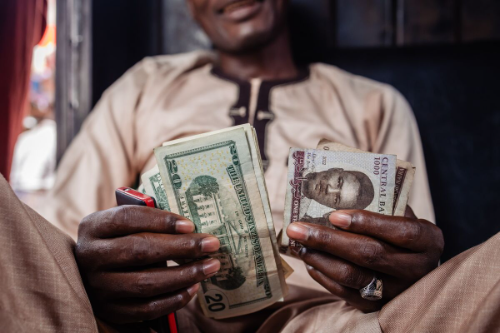
Nigerian Naira currency notes and US dollar bills
BREAKING NEWSOctober 8, 2026 at 2:50 AM UTC

TLDR

  • Naira strengthens to a two-year high of N1,331.77 per dollar in the official market.
  • Increased dollar inflows and CBN foreign exchange reforms are cited as key drivers.
  • Analysts caution on reliance on portfolio flows despite improved stability.

Nigeria's naira has strengthened to a two-year high, reaching N1,331.77 per dollar in the official foreign exchange market. This appreciation occurred despite fears of pressure following an interest-rate cut by the Monetary Policy Committee. The Central Bank of Nigeria (CBN) and financial institutions have observed these developments.

The currency's resilience is attributed to increased dollar inflows and improved market liquidity. The CBN's foreign exchange reforms, coupled with tighter monetary policy and enhanced liquidity management, have contributed to greater stability. CBN Deputy Governor Muhammad Sani Abdullahi highlighted that autonomous sources now account for a significant portion of foreign exchange inflows, reducing market reliance on direct CBN intervention.

The naira appreciated by 24.68% to N1,331.77 per dollar on Wednesday, from N1,660.49 on October 18, 2024. In the parallel market, it gained 25.55% from N1,720 per dollar traded in 2024. Nigeria's external reserves also grew, reaching $54.98 billion as of October 6, 2026, a 24.68% increase from $42.54 billion in 2025. Total inflows in July 2026 were $10.82 billion, with $7.33 billion (nearly 68%) from autonomous sources.

The appreciation reflects stronger autonomous FX supply, rising external reserves, and improved confidence in the market-based framework. While CBN reforms have led to greater stability, analysts caution that substantial portfolio investor contributions mean Nigeria remains vulnerable to global risk and investor sentiment shifts. The recent Monetary Policy Rate cut to 23.0% from 26.5% is viewed as a "reset" to restore policy effectiveness, not the start of a prolonged easing cycle.

The durability of the naira's gains depends on Nigeria's ability to sustain improvements and reduce volatility exposure. The CBN aims to make these improvements more durable and deepen investment and foreign exchange supply sources. Coronation Merchant Bank suggests a genuine easing cycle requires sustained disinflation progress, greater exchange-rate stability confidence, and evidence that external-sector gains can be maintained without heavy reliance on portfolio inflows.

Key Takeaways

The recent strengthening of Nigeria's naira to a two-year high of N1,331.77 per dollar in the official market signifies a notable shift in the country's foreign exchange landscape. This appreciation, occurring despite a recent interest-rate cut, is largely driven by increased dollar inflows, improved market liquidity, and the Central Bank of Nigeria's (CBN) foreign exchange reforms. A key factor is the significant rise in autonomous foreign exchange supply, which now accounts for nearly 68% of total inflows, reducing the market's reliance on direct CBN intervention. This shift, alongside growing external reserves ($54.98 billion as of October 2026), moderating inflation (15.43% in July 2026), and robust GDP growth (4.43% in Q2 2026), points to improved macroeconomic stability. However, analysts caution that the substantial contribution from portfolio investors, while boosting reserves, also exposes Nigeria to global risk and investor sentiment shifts. The Monetary Policy Committee's decision to cut the Monetary Policy Rate to 23.0% is widely interpreted as a "reset" to restore policy effectiveness rather than the commencement of a sustained easing cycle. For durable gains, the CBN must continue its efforts to deepen investment and diversify foreign exchange supply sources, ensuring that external-sector improvements are not overly reliant on volatile portfolio inflows. Sustained progress on disinflation and greater confidence in exchange-rate stability will be crucial for long-term currency resilience.
Nigeria

Think someone else should see this?

share on twittershare on linkedinshare on facebookshare to whatsapp
share on mail
share on instagram
Stay informed with our newsletters read by 25,000+ professionals worldwide
Newsletter companiesNewsletter companiesNewsletter companiesNewsletter companiesNewsletter companiesNewsletter companies

Next Frontier

Stay up to date on major news and events in African markets. Delivered weekly.

Pulse54

Events

Sign up to stay informed about our regular webinars, product launches, and exhibitions.

+25k investors have already subscribed

To invest in this opportunity and other opportunities across Africa

Download the daba finance app on your mobile through


appstore iconappstore icon
Phone Image

Take action.

Download app

Partner with us

Unlock exciting business opportunities and growth potential.

Join Daba

Become a part of our vibrant community and enjoy exclusive benefits.

Contact us

Reach out to us for inquiries, support, or collaboration.
For Investor
Dangote Refinery IPO TrackerNewStrategiesPortfolio ManagementAfrican Capital MarketsNews
Daba Pro Intelligence
Daba  Academy
Markets
BRVM — Bourse Régionale des Valeurs MobilièresNGX — Nigerian Exchange
For Capital Seekers
For StartupsFor Fund ManagersFor Private CompaniesFor Lenders
For Partners
Commercial BanksBroker DealersAsset ManagersInvestment BanksInvestment Advisors and ConsultantsLenders and Microfinance
Company
About UsMarket UpdatesEventsBlog and PodcastNewsletterCase StudiesAffiliate ProgramInvesting GlossaryOfficial ContactsTrust, Compliance and SecurityFrequently Asked Questions

Terms & ConditionsPrivacy Policy
EnglishEnglish

Owned by Daba Markets Inc. By using this site, you accept our Terms and Conditions and Privacy Policy. © 2026 All rights reserved