


Namibia Holds Rates As South Africa’s Policy Shift Limits Room To Cut
TLDR
- Namibia’s central bank kept its key interest rate unchanged at 6.50%, citing the need to protect its currency peg with South Africa as policy conditions tighten across the border
- The decision reflects Namibia’s close monetary link with South Africa, whose rand is pegged one-to-one with the Namibian dollar
- The Bank of Namibia said South Africa’s benchmark rate remains slightly higher, and reducing the gap too quickly could pressure capital flows and the exchange-rate arrangement
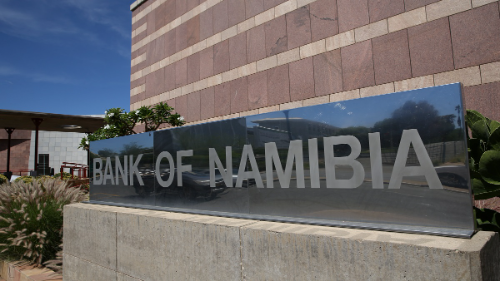
Namibia’s central bank kept its key interest rate unchanged at 6.50%, citing the need to protect its currency peg with South Africa as policy conditions tighten across the border.
The decision reflects Namibia’s close monetary link with South Africa, whose rand is pegged one-to-one with the Namibian dollar. South Africa recently adopted a stricter 3% inflation target, prompting Namibian policymakers to place greater weight on domestic price stability to preserve confidence in the peg.
The Bank of Namibia said South Africa’s benchmark rate remains slightly higher, and reducing the gap too quickly could pressure capital flows and the exchange-rate arrangement. As a result, it held policy steady despite easing inflation risks.
On the growth outlook, the bank lowered its 2025 economic expansion forecast to 3% from 3.5%, pointing to weak output in manufacturing and diamond mining. Inflation expectations were broadly unchanged, with a small downward revision for next year due to a firmer currency outlook and lower projected oil prices.
The decision marked the final policy meeting under Governor Johannes !Gawaxab, who steps down at the end of the year. The government has yet to name his successor.
Daba's newsletter is now on Substack. Sign up here to get the best of Africa's investment landscape
Key Takeaways
Namibia’s rate decision highlights how smaller economies with currency pegs have limited policy independence. With the Namibian dollar tied to the South African rand, local interest-rate moves must closely track South Africa to avoid capital outflows and exchange-rate strain. South Africa’s tighter inflation framework raises the bar for regional partners, even as growth slows. For Namibia, this means borrowing costs may stay higher for longer, despite softer inflation and weaker activity in key sectors such as mining. The outlook also underscores structural risks. Diamond mining remains central to Namibia’s economy, leaving growth vulnerable to global demand swings. Manufacturing has yet to provide a strong offset. While lower oil prices and a stable currency may ease inflation pressures, policymakers are prioritising monetary stability over short-term stimulus. The upcoming leadership change at the central bank adds another layer of uncertainty, as markets watch for continuity in managing the peg and balancing growth with price stability.
Think someone else should see this?









To invest in this opportunity and other opportunities across Africa
Download the daba finance app on your mobile through

Take action.

Download app

Partner with us
Unlock exciting business opportunities and growth potential.
Join Daba
Become a part of our vibrant community and enjoy exclusive benefits.
Contact us
Reach out to us for inquiries, support, or collaboration.