


Niger Secures Concessions From China's CNPC as Oil Output Stabilizes
TLDR
- Niger secures new agreements with CNPC, marking a shift in management of hydrocarbon resources.
- The country acquires a 45% stake in WAPCO, with increased national management positions and reduced pipeline tariff.
- Niger aims to expand energy value chain with projects like a refinery, storage infrastructure, and participation in the Trans-Saharan Gas Pipeline.
Niger concluded new memoranda of understanding with Chinese partners on May 18, 2026, ending a year of tensions with China National Petroleum Corporation (CNPC), the world's third-largest oil company and the dominant foreign operator in the country's oil sector. The agreements deliver a series of concessions to the Nigerien state that mark a shift in how Niamey manages its hydrocarbon resources.
Under the deals, Niger will acquire a 45% stake in West African Oil Pipeline Company (WAPCO), CNPC's local subsidiary. The share of management positions held by Nigeriens will rise to 60% from 30%, and 80% of operational jobs will be reserved for national workers. The pipeline transport tariff will be cut from $27 to $15 per barrel, generating an estimated $106 million (60 billion XOF) in annual savings for the state.
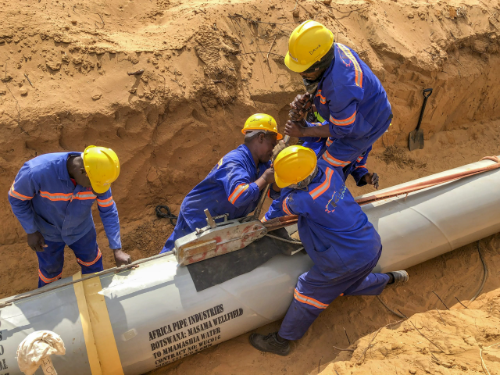
The agreements come as Niger's oil production stabilises at 110,000 barrels per day following the 2024 commissioning of the 1,950 km Niger-Benin pipeline, which provided the country with its first direct export route to the Atlantic coast. Production has been on a steady climb since first commercial output of 20,000 barrels per day in 2011, with more than 100 discoveries recorded in the Agadem Basin between 2012 and 2018.
Niger is now building on that base toward a fuller energy value chain. Projects under development include a refinery in Dosso, strategic storage infrastructure, fuel production covering jet fuel and LPG, natural gas processing, and the Trans-Saharan Gas Pipeline connecting Nigeria to Algeria via Niger to supply European markets. Around 70% of national territory is comprised of sedimentary basins, with 8 oil blocks covering more than 240,000 km² still available for exploration.
The model is drawing attention across the region. In Chad, oil sector unions have publicly called for replicating Niger's approach, which they view as more favourable to national interests than existing arrangements. The dynamic reflects a broader continental trend of resource-producing states seeking larger shares of extractive industry revenues.
Key Takeaways
Niger's renegotiation with CNPC is part of a wider pattern of African resource nationalism that has accelerated since 2022, as military-led governments in the Sahel — Niger joined Burkina Faso and Mali in the Alliance of Sahel States after its own July 2023 coup — have moved to assert greater control over strategic industries. The CNPC deal is notable because it was achieved without expulsion or nationalisation: Niamey used the leverage of pipeline dependency — CNPC needs the Niger-Benin route to export production — to extract equity, employment, and tariff concessions while keeping the partnership intact. That combination of firmness and pragmatism contrasts with more disruptive resource renegotiations elsewhere on the continent and could serve as a template for other landlocked producers. The $106 million in annual pipeline tariff savings alone is material for a country whose total government revenue is estimated at under $2 billion per year. The longer-term ambition — a refinery, gas processing, and participation in the Trans-Saharan pipeline — points to a Nigerien state that is trying to move from raw commodity exporter to energy value chain participant, a transition that will require sustained foreign investment even as it demands a larger domestic share of the proceeds.
Think someone else should see this?









To invest in this opportunity and other opportunities across Africa
Download the daba finance app on your mobile through

Take action.

Download app

Partner with us
Unlock exciting business opportunities and growth potential.
Join Daba
Become a part of our vibrant community and enjoy exclusive benefits.
Contact us
Reach out to us for inquiries, support, or collaboration.