


Nigerian Exchange Group Marks Six Decades of Capital Market Evolution
TLDR
- Nigerian Exchange Group traces its origins to the Lagos Stock Exchange, incorporated on September 15, 1960.
- The market facilitated N6.49 trillion in capital raising in 2025 and N10.84 trillion for the Federal Government by September 2026.
- NGX Group aims to deepen the capital market's capacity to finance Nigeria's economic growth, leveraging technology for broader participation.
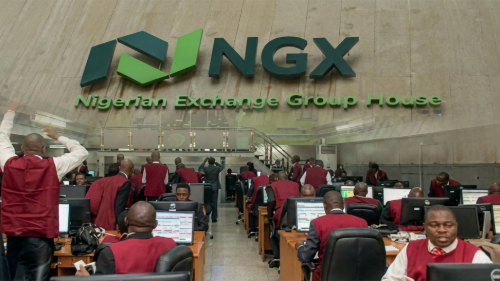
Nigerian Exchange Group (NGX Group) traces its origins to September 15, 1960, when the Lagos Stock Exchange was incorporated, just weeks before Nigeria gained independence. This institution has evolved from the Lagos Stock Exchange to the Nigerian Stock Exchange and, following its demutualisation in 2021, to NGX Group, retaining its foundational 1960 incorporation date. For over six decades, the development of Nigeria’s capital market has mirrored the country’s economic journey, from nation-building through industrialisation and technological transformation.
The core function of the capital market is to connect capital with opportunity, mobilising savings and investment to finance businesses, public priorities, and long-term economic activity. Temi Popoola, Group Managing Director and Chief Executive Officer of Nigerian Exchange Group, emphasizes the priority of ensuring the market has the necessary depth and capacity to support Nigeria’s next phase of growth. He stated that Nigeria's ambitions require capital at a scale that cannot come from any single source, placing the capital market at the center of the financing conversation.
The Nigerian Exchange has facilitated significant capital raising, with approximately N6.49 trillion in 2025 from government and corporate issuers through equity and fixed-income instruments. This momentum continued into 2026, as the Federal Government raised about N10.84 trillion through FGN bonds between January and September. By September, corporate listings on NGX reached approximately N2.76 trillion, encompassing a mix of equity, corporate bonds, commercial papers, and supplementary listings.
These funds are crucial for supporting business expansion, strengthening balance sheets, funding new investments, and creating capacity for growth across the economy. Government borrowing through the capital market mobilises domestic savings towards public financing requirements, while investors gain opportunities to allocate capital to instruments participating in the country's economic activity. A recent banking-sector recapitalisation, which concluded in March 2026, saw 33 banks raise N4.65 trillion in fresh capital, demonstrating the market's capacity to strengthen the financial system and support economic growth.
The capital market is increasingly viewed as economic infrastructure, rather than merely a place for trading securities, facilitating economic transformation. Technology plays a vital role, with NGX Invest, a digital public-offer platform, facilitating over N2.8 trillion, or about 60%, of the capital raised during the banking recapitalisation. This platform helps connect issuers with a broader pool of investors and simplifies the subscription process, pointing to a larger shift towards broader participation and digital enablement in Nigeria's capital formation.
Key Takeaways
Companies in this story
Think someone else should see this?









To invest in this opportunity and other opportunities across Africa
Download the daba finance app on your mobile through

Take action.

Download app

Partner with us
Unlock exciting business opportunities and growth potential.
Join Daba
Become a part of our vibrant community and enjoy exclusive benefits.
Contact us
Reach out to us for inquiries, support, or collaboration.