Individuals
Businesses
Company
Intelligence
News
African Capital Markets
Dangote IPONew
EnglishEnglish
share on twittershare on linkedinshare on facebookshare to whatsapp
share on mail
share on instagram

Moody's Downgrades Senegal Sovereign Rating to Ca
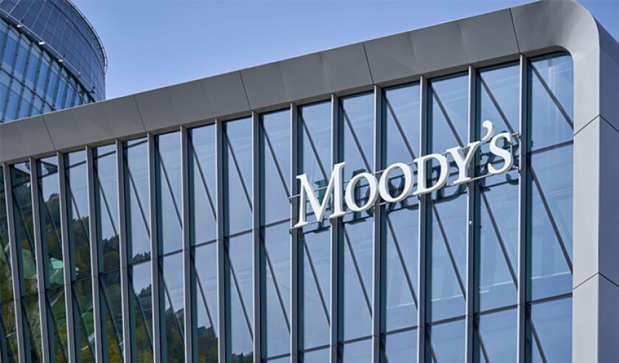
Graph showing a downward-pointing arrow symbolizing Moody's downgrade of Senegal's credit rating.
AFRICAN STOCKS AND FINANCENovember 3, 2026 at 2:53 PM UTC

TLDR

  • Moody's downgrades Senegal's sovereign rating from Caa2 to Ca.
  • The decision anticipates substantial losses for external private creditors.
  • The country maintains its debt in local currency, concentrating the risk on international bonds.

The international credit rating agency Moody's downgraded Senegal's sovereign foreign-currency rating from Caa2 to Ca on November 2, 2026. This fifth downgrade comes less than two months after a previous downgrade on August 28, 2026. It follows Dakar’s announcement in September of its intention to utilize the G20 Common Framework for debt treatment. The new Ca rating indicates an “extremely high credit risk” for the country.

While a Caa2 rating assesses the probability of default, the Ca rating means that default is now the baseline scenario, with the central question being the extent of losses for creditors. Moody’s anticipates substantial losses for external private creditors in the context of a future debt restructuring, no longer focusing solely on fiscal balances. The outlook for the local currency is stable, but this does not indicate optimism.

Local-currency debt accounts for about one-third of the Senegalese central government’s total debt. By choosing to preserve this portion, Dakar reduces the scope of debt likely to be affected by a restructuring. The burden of adjustment thus falls more heavily on other categories of creditors, particularly holders of international bonds. It is this shift in risk that Moody’s is penalizing.

This downgrade has significant implications for investors and Senegalese companies. It affects the country’s eligibility for certain indices and portfolios, as well as contractual clauses, collateral requirements, and credit limits applicable to domestic companies. The report highlights the difficulty of protecting the regional financial market, restoring the government’s credibility, and maintaining financing for the economy.

The decision to maintain debt in local currency is a constraint, as a devaluation would impact the balance sheets of banks in the WAEMU zone, risking intolerable regional contagion. This protection comes at a hidden cost: Senegal remains dependent on the regional market, its sole source of financing. If banks increase their holdings of government securities, this could lead to high yields and credit rationing for the private sector. The stable outlook indicates that Moody’s considers the risks associated with this rating to be balanced thanks to UEMOA’s support.

Key Takeaways

Moody's recent downgrade is presented as an administrative consequence rather than an economic revelation. The report suggests that Moody's is "behind the market," as prices for Senegalese Eurobonds have likely already factored in the expected losses following Dakar's announcement that it would use the G20 Common Framework. The real impact of the downgrade lies in its effects on index eligibility, contractual clauses, collateral requirements, and lending limits for Senegalese companies. A crucial aspect is Senegal’s strategic decision to maintain its debt in local currency, which accounts for about one-third of its public debt. This choice is necessary to avoid harming the balance sheets of WAEMU banks and risking regional contagion. However, this protection shifts the burden of adjustment onto international creditors, a move that Moody’s criticizes. This creates a hidden cost: Senegal’s continued dependence on the regional market—its sole source of financing—which could lead to high yields and credit rationing for the private sector. The paradox of a stable outlook, despite the severity of the downgrade, indicates that Moody’s views the risks surrounding this severely downgraded rating as relatively balanced, in part due to the support provided by Senegal’s membership in the UEMOA.
Sénégal
Moody's
Dégradation
Note souveraine
Dette publique
UEMOA
Cadre commun G20
Marché financier régional

Think someone else should see this?

share on twittershare on linkedinshare on facebookshare to whatsapp
share on mail
share on instagram
Stay informed with our newsletters read by 25,000+ professionals worldwide
Newsletter companiesNewsletter companiesNewsletter companiesNewsletter companiesNewsletter companiesNewsletter companies

Next Frontier

Stay up to date on major news and events in African markets. Delivered weekly.

Pulse54

Events

Sign up to stay informed about our regular webinars, product launches, and exhibitions.

+25k investors have already subscribed

To invest in this opportunity and other opportunities across Africa

Download the daba finance app on your mobile through
appstore iconappstore icon
Phone Image

Take action.

Download app

Partner with us

Unlock exciting business opportunities and growth potential.

Join Daba

Become a part of our vibrant community and enjoy exclusive benefits.

Contact us

Reach out to us for inquiries, support, or collaboration.
For Investor
Dangote Refinery IPO TrackerNewStrategiesPortfolio ManagementAfrican Capital MarketsNews
Daba Pro Intelligence
Daba  Academy
Markets
BRVM — Bourse Régionale des Valeurs MobilièresNGX — Nigerian Exchange
For Capital Seekers
For StartupsFor Fund ManagersFor Private CompaniesFor Lenders
For Partners
Commercial BanksBroker DealersAsset ManagersInvestment BanksInvestment Advisors and ConsultantsLenders and Microfinance
Company
About UsMarket UpdatesEventsBlog and PodcastNewsletterCase StudiesAffiliate ProgramInvesting GlossaryOfficial ContactsTrust, Compliance and SecurityFrequently Asked Questions

Terms & ConditionsPrivacy Policy
EnglishEnglish

Owned by Daba Markets Inc. By using this site, you accept our Terms and Conditions and Privacy Policy. © 2026 All rights reserved