


Senegal Oil Output Reaches 17.9M Barrels in First Half
TLDR
- Senegal's Sangomar field produced 17.9 million barrels of crude oil in the first half of 2026, aiming to achieve 31.6 million barrels for the year.
- Three crude shipments were sold in June, totaling 2.94 million barrels, with plans to leverage oil and gas for economic growth.
- 3 LNG cargoes were exported from the Greater Tortue Ahmeyim project, contributing to the country's hydrocarbon revenue projection of 703.2 billion CFA francs.
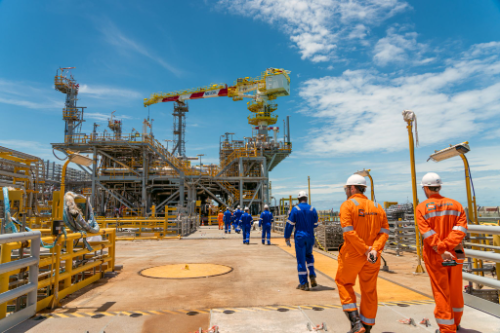
Senegal produced 17.9 million barrels of crude oil from its Sangomar field in the first 6 months of 2026, putting the country on track to meet a higher annual target, the Ministry of Petroleum and Energy said.
Three crude shipments were sold on the international market in June, totaling 2.94 million barrels. Since production started at Sangomar, 70.90 million barrels have been produced and 70.47 million barrels have been sold, according to the ministry’s monthly report.
The government now expects 2026 output to reach 31.6 million barrels, up from an initial forecast of 28.1 million barrels. Sangomar has capacity of 100,000 barrels a day and can produce 60 million to 100 million cubic feet of gas. The first phase of the project includes 23 wells.
Senegal also exported 3 LNG cargoes in June from the Greater Tortue Ahmeyim project, with a total volume of 0.49 million cubic meters. Production at the BP-backed gas project, shared with Mauritania, began in December 2024. The field holds about 20 trillion cubic feet of gas, or 530 billion cubic meters.
The government is counting on oil and gas to support industry, power supply and public finances. Hydrocarbon revenue is projected at 703.2 billion CFA francs from 2027 to 2029, including 397.8 billion CFA francs in 2027, 168 billion CFA francs in 2028 and 137.4 billion CFA francs in 2029.
Key Takeaways
Senegal’s first full years as an oil and gas producer are starting to change the shape of its economy, but the gains will depend on how the money is managed. Sangomar gives the country a new export stream at a time when budgets are tight and demand for jobs, power and infrastructure is high. Gas from Greater Tortue Ahmeyim could also help reduce power costs if part of the supply is used at home, which would support factories and small firms. For investors, the main issue is not only production volume. It is whether oil and gas revenue can lower fiscal pressure, improve foreign exchange inflows and fund projects that raise growth outside the extractive sector. The risk is that volatile oil prices, contract disputes, cost overruns or weak governance limit the impact. Senegal has said it wants hydrocarbons to support development rather than create dependence. That means clear revenue rules, public reporting and investment in power, transport, skills and local firms will matter. The June data show output is stable, but the real test is whether energy revenue becomes a base for broader growth.
Think someone else should see this?









To invest in this opportunity and other opportunities across Africa
Download the daba finance app on your mobile through

Take action.

Download app

Partner with us
Unlock exciting business opportunities and growth potential.
Join Daba
Become a part of our vibrant community and enjoy exclusive benefits.
Contact us
Reach out to us for inquiries, support, or collaboration.