


South Africa Agricultural Exports Reach Record Despite US Slump
TLDR
- South Africa’s agricultural exports hit a record $15.1 billion in 2025, with a 10% increase from 2024, driven by higher export volumes and improved prices.
- Despite declining shipments to the US due to imposed tariffs, sales to other regions compensated, with the rest of Africa being the largest market.
- Diversification of export markets, especially towards Africa, Asia, and Europe, has helped maintain export resilience and stability in South Africa’s agricultural sector.
South Africa’s agricultural exports rose to a record $15.1 billion in 2025, extending a multi-year growth trend even as shipments to the US declined in the second half of the year.
Exports increased 10% from 2024, marking the seventh straight year of expansion, according to the Agricultural Business Chamber of South Africa. The rise was driven by higher export volumes and improved prices across several product categories.
Sales to the US weakened after tariffs were imposed on selected agricultural goods. Shipments fell 11% in the third quarter and dropped 39% in the final quarter, the chamber said. The US and the broader Americas accounted for 4% of South Africa’s agricultural exports in the fourth quarter.
Other regions offset the decline. The rest of Africa remained the largest market, representing 53% of exports in the final quarter. Asia and the Middle East accounted for 17%, while the European Union represented 16%.
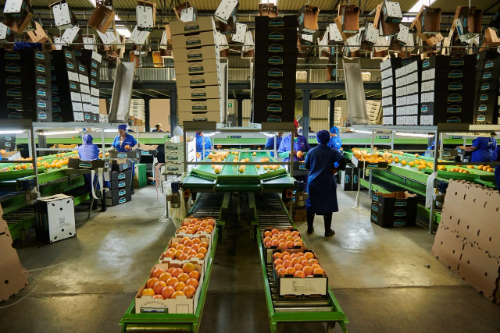
South Africa exports a wide range of agricultural products, including citrus, wine, nuts, grains and livestock products. The sector has benefited from diversified markets and improved logistics, even as global trade conditions remain uneven.
Key Takeaways
South Africa’s agricultural sector continues to benefit from broad geographic diversification. While the US market weakened due to tariffs, exporters redirected volumes toward Africa, Asia and Europe, limiting the overall impact on earnings. Intra-African trade has become more important as regional demand grows and logistics links improve. Neighboring countries provide steady demand for food products, while reducing exposure to policy shifts in developed markets. Asia and the Middle East remain key growth markets due to population growth and rising food imports. These regions have absorbed larger volumes of fruit, grains and processed foods in recent years. The export mix also supports stability. Many products are less sensitive to short-term price swings and benefit from long-term supply contracts. This has helped smooth revenue despite global trade disruptions. For policymakers, the data underscores the value of market access and trade agreements beyond traditional partners. For investors, it highlights agriculture as a sector with steady foreign currency earnings, even in periods of shifting global trade policies.
Think someone else should see this?









To invest in this opportunity and other opportunities across Africa
Download the daba finance app on your mobile through


Take action.

Download app

Partner with us
Unlock exciting business opportunities and growth potential.
Join Daba
Become a part of our vibrant community and enjoy exclusive benefits.
Contact us
Reach out to us for inquiries, support, or collaboration.