


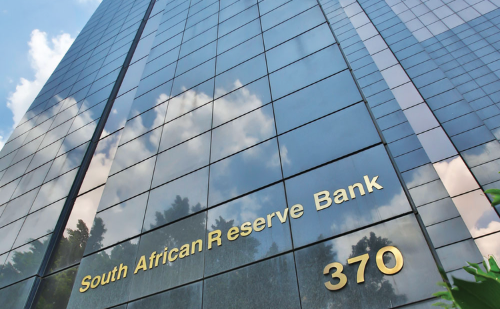
South African Reserve Bank Holds Rates at 7% Despite Inflation Shock
TLDR
- South African Reserve Bank leaves benchmark rate unchanged at 7%, surprising markets expecting an increase after inflation rise
- Monetary Policy Committee votes 4-2 to maintain rates; Governor Kganyago expresses confidence in restrictive policy to lower inflation
- Decision reflects central bank's cautious approach to balancing inflation risks with weak economic growth, signaling potential stability in interest rates ahead
The South African Reserve Bank left its benchmark repurchase rate unchanged at 7% on Thursday, surprising markets that had widely expected another interest rate increase after inflation climbed to a two-year high in June.
The Monetary Policy Committee voted 4-2 to keep rates unchanged, with two members favoring a 25-basis-point increase. Following the decision, the rand weakened sharply, falling more than 2% against the U.S. dollar as investors scaled back expectations of a more aggressive tightening cycle.
Governor Lesetja Kganyago said monetary policy remains sufficiently restrictive to bring inflation back within the central bank's target range next year and to its 3% objective by 2028. Although annual inflation rose to 5.0% in June, the bank lowered its average inflation forecast for this year to 4.0% from 4.4% previously and raised its 2026 economic growth forecast to 1.4% from 1.2%. Kganyago said policymakers faced the difficult challenge of containing inflation while supporting an economy with weak domestic demand.
The decision divided economists, with a majority in a Reuters survey expecting a rate increase. Some analysts continue to forecast another hike at the central bank's September meeting if inflationary pressures persist, while others believe the rate increase delivered in May provides enough room for policymakers to pause before considering any further action.
Key Takeaways
The South African Reserve Bank's decision highlights the increasingly difficult balancing act facing central banks as inflation risks persist while economic growth remains fragile. Although headline inflation has moved above the bank's preferred target, policymakers appear confident that current interest rates are restrictive enough to bring price growth lower over time without imposing unnecessary pressure on households and businesses. By choosing to pause despite market expectations for another hike, the central bank signaled greater confidence in its inflation outlook and a willingness to tolerate short-term volatility rather than overtighten monetary policy. The sharp decline in the rand reflects how closely investors monitor central bank guidance, particularly when interest rate expectations shift unexpectedly. Going forward, policymakers will likely focus on whether higher energy prices, imported inflation and rising inflation expectations begin feeding into wages and broader consumer prices. If those second-round effects emerge, the bank could still tighten policy later this year. Otherwise, stable interest rates could provide some support to investment and consumption in an economy that continues to face weak growth and persistently high unemployment.
Think someone else should see this?









To invest in this opportunity and other opportunities across Africa
Download the daba finance app on your mobile through

Take action.

Download app

Partner with us
Unlock exciting business opportunities and growth potential.
Join Daba
Become a part of our vibrant community and enjoy exclusive benefits.
Contact us
Reach out to us for inquiries, support, or collaboration.