


South Africa Delays AI Policy After Fake References Scandal
TLDR
- South Africa delays national artificial intelligence policy to January 2027 after withdrawing draft with fabricated academic references, raising questions on government's generative AI use and approval process.
- Department of Communications and Digital Technologies did not catch false references before media exposure, leading to suspension of 2 officials and implementation of stronger internal policy controls.
- Independent AI review panel chaired by Prof. Benjamin Rosman tasked to rebuild document, highlight need for transparent and robust AI governance in a technology-driven era.
South Africa has delayed its national artificial intelligence policy to January 2027 after withdrawing an earlier draft that included fabricated academic references.
The delay has raised questions about how government officials used generative AI in drafting the document and whether there were enough checks before the policy was approved by Cabinet in March and opened for public comment in April.
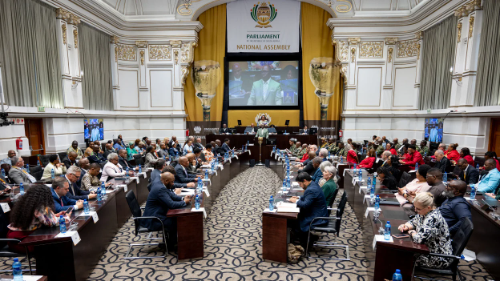
Communications Minister Solly Malatsi told parliament that the Department of Communications and Digital Technologies did not detect the false references before they were exposed in media reports. He said 2 officials had been suspended and that the department would strengthen internal controls around policy drafting and responsible AI use.
The government appointed an independent AI review panel on May 14 to rebuild the withdrawn document and recommend changes before it is sent back to Cabinet. The panel will be chaired by Prof. Benjamin Rosman of the University of the Witwatersrand and includes experts in AI research, law, cybersecurity, governance and digital policy.
The setback leaves South Africa without a formal national AI policy while businesses and public institutions continue to adopt AI tools. The revised framework is expected to be released for public comment in January 2027, adding pressure on the government to restore confidence in its AI governance process and keep pace with a technology already reshaping work, public services and regulation.
Key Takeaways
South Africa’s AI policy delay shows the problem governments face when trying to regulate a technology they are also learning to use. The fake references scandal is not only a drafting error. It points to weak review processes, unclear rules for using generative AI and a lack of technical oversight in public policy work. For a country that wants to lead African AI governance, credibility matters. Businesses, universities, investors and civil society need a policy process they can trust. The delay may slow formal regulation, but it could also improve the final framework if the review panel creates stronger rules around AI safety, data governance, public-sector use, skills, accountability and innovation. The risk is that AI adoption keeps moving faster than policy. Banks, schools, hospitals, call centers, public agencies and startups are already testing AI tools. Without clear rules, the country could face gaps around privacy, bias, job displacement, cybersecurity and responsibility when AI systems fail. The next draft will need to do more than fix citations. It must show that government can govern AI with discipline.
Think someone else should see this?









To invest in this opportunity and other opportunities across Africa
Download the daba finance app on your mobile through


Take action.

Download app

Partner with us
Unlock exciting business opportunities and growth potential.
Join Daba
Become a part of our vibrant community and enjoy exclusive benefits.
Contact us
Reach out to us for inquiries, support, or collaboration.