


UN Backs Ghana-Led Resolution on Slave Trade Reparations
TLDR
- The UN General Assembly resolution recognizes transatlantic slave trade as a crime against humanity and supports reparations for African nations.
- Ghana initiated the measure, with President John Dramani Mahama leading the effort aligned with the International Day of Remembrance for Victims of the Transatlantic Slave Trade.
- Despite divisions, the resolution signifies increasing global acknowledgment of the historical injustices and ongoing inequalities related to the transatlantic slave trade.
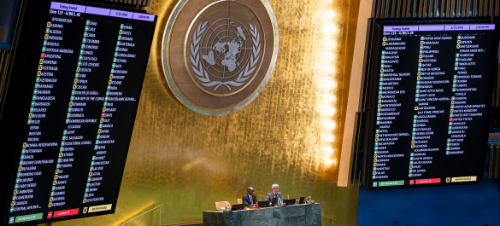
The United Nations General Assembly adopted a resolution recognizing the transatlantic slave trade as a crime against humanity and supporting reparations for African nations, with 123 countries voting in favor.
The measure, introduced by Ghana, passed on March 25, with 52 countries abstaining and three voting against — the United States, Israel and Argentina.
The resolution states that the transatlantic slave trade, which lasted about 400 years, represents a major crime due to its scale, duration and long-term effects on global economic and social systems. It calls reparations a step toward addressing historical harm and ongoing inequalities affecting people of African descent.
Ghana’s President John Dramani Mahama led the initiative, aligning the vote with the International Day of Remembrance for the Victims of the Transatlantic Slave Trade.
Countries in Europe, along with Canada, Australia and Japan, abstained from the vote, reflecting divisions over the issue of reparations and legal responsibility.
Key Takeaways
The resolution reflects growing international attention to historical injustices and their economic and social impact on Africa and the diaspora. While non-binding, UN General Assembly resolutions often signal global consensus and influence policy debates. The strong majority in favor suggests increasing support for acknowledging the transatlantic slave trade as a foundational global injustice with lasting consequences. However, the split vote also highlights ongoing disagreement among major economies over reparations, particularly around legal liability and implementation. The United States and other opposing countries argue that international institutions should focus on present-day challenges rather than historical claims, and that reparations lack a clear legal framework. For African countries, the resolution is part of a broader push to address colonial and historical injustices through international platforms, including initiatives led by the African Union. The debate over reparations is likely to continue, with discussions focusing on financial compensation, development support and structural reforms. Although the resolution does not create legal obligations, it adds momentum to global conversations on equity, historical accountability and economic justice, which could influence future diplomatic and economic negotiations.
Think someone else should see this?









To invest in this opportunity and other opportunities across Africa
Download the daba finance app on your mobile through


Take action.

Download app

Partner with us
Unlock exciting business opportunities and growth potential.
Join Daba
Become a part of our vibrant community and enjoy exclusive benefits.
Contact us
Reach out to us for inquiries, support, or collaboration.